
Loading...
Your walls are letting in the East Texas heat all summer long. We insulate finished and open walls in Nacogdoches homes so every room stays comfortable and your energy bills stop climbing.
Wall insulation in Nacogdoches slows the movement of heat through your exterior walls, keeping your living spaces cooler in summer and warmer during cold snaps, with most finished-wall jobs completed in a single day.
If certain rooms never feel comfortable no matter how hard your HVAC runs, your walls are likely where the heat is getting in. Nacogdoches has a large share of homes built before the 1980s - a period when wall insulation was minimal by today's standards - and that gap shows up on energy bills every summer. We work with homeowners throughout Nacogdoches to assess what is actually in their walls and install the right material for the local climate.
Wall insulation works best as part of a broader comfort improvement. Pairing it with our air sealing services closes the gaps that let conditioned air escape alongside the heat that wall insulation blocks.
If your electricity costs jump sharply from May through September and your HVAC runs almost constantly, your walls may be letting the East Texas heat pour straight into your home. Nacogdoches summers are long and intense, and poorly insulated walls force your air conditioner to work far harder than it should. If neighbors in similar-sized homes pay noticeably less, your walls are worth a closer look.
Walk through your home on a hot afternoon and notice whether rooms on the south or west side feel significantly warmer than the rest. That uneven temperature is a classic sign that the walls in those rooms are not holding the heat out. It is not a thermostat problem - it is a wall problem.
On a hot summer day, hold your hand near an electrical outlet or light switch on an exterior wall. If you feel warm air seeping through, that wall cavity behind it has little or no insulation. This is one of the easiest checks you can do without any tools, and it reliably points to under-insulated walls throughout that section of the home.
Older homes in Nacogdoches - particularly those near downtown or the historic neighborhoods around Stephen F. Austin State University - were often built with little or no wall insulation by modern standards. If you have never had your walls assessed and your home is more than 40 years old, there is a good chance you are heating and cooling the outdoors along with your living space.
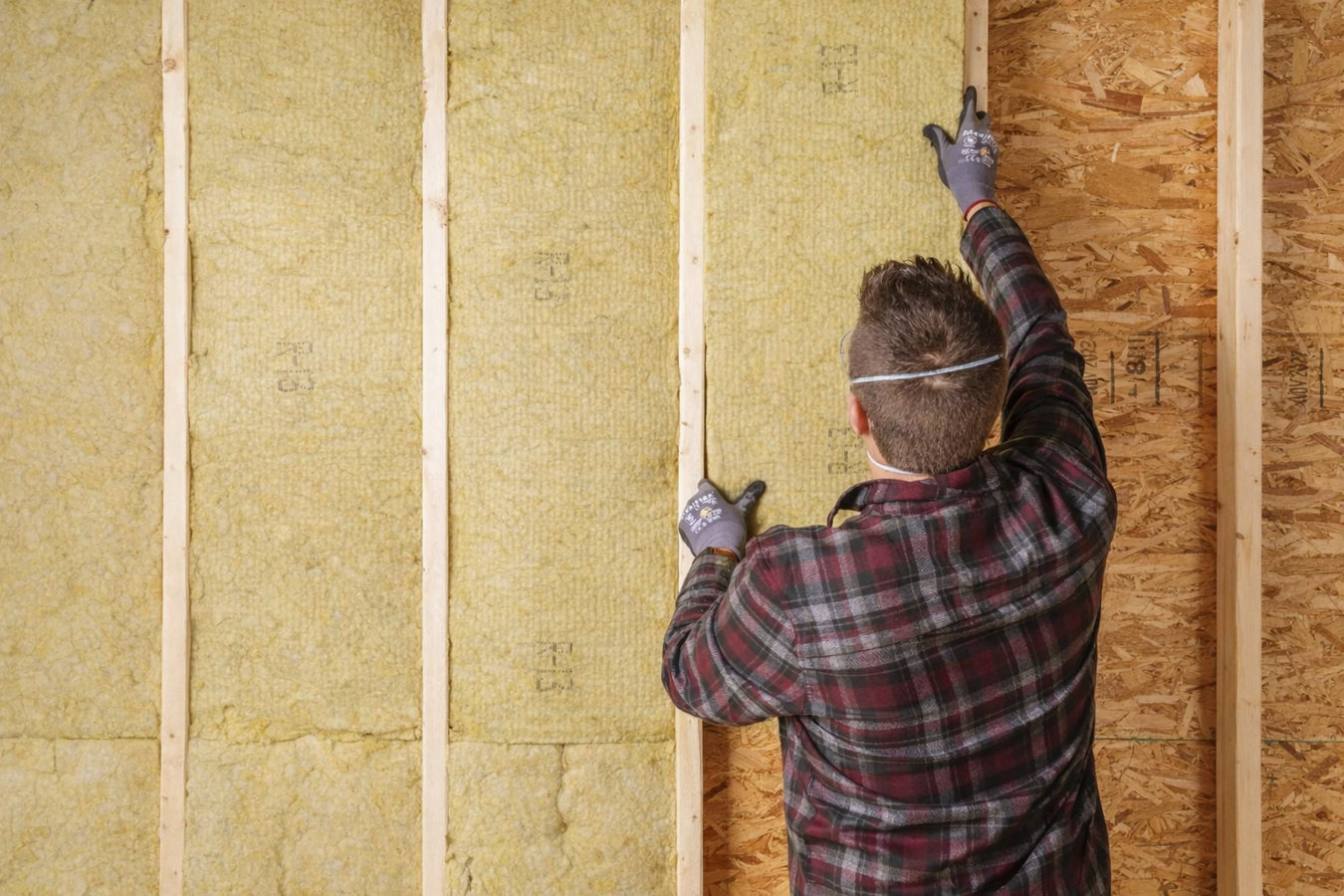
We install wall insulation using two main methods, and we recommend the right one based on your home's current condition. For finished walls that are already drywalled, we use blown-in insulation - drilling small access holes, filling each wall cavity completely, and patching the holes neatly when we are done. The result is a fully insulated wall without tearing anything apart. We verify coverage using density checks or a thermal camera before we patch and leave. For walls that are open during a renovation, batt insulation - cut-and-fitted fiberglass or mineral wool - goes in quickly and is ready for drywall the same day.
Wall insulation is rarely the whole picture on its own. Gaps around outlets, wiring, and where walls meet the ceiling are separate air leakage points that insulation alone does not address. That is why we also offer air sealing services that close those gaps alongside the insulation work. For homeowners dealing with older exterior wall material or considering a full upgrade, our blown-in insulation service covers wall and attic applications in one visit.
Best for homeowners with finished, drywalled exterior walls who want full coverage without tearing out and replacing interior surfaces.
Suited for renovation projects where walls are already exposed, allowing fast installation before drywall goes back up.
Ideal for older Nacogdoches homes that were built with minimal insulation and need a full-cavity upgrade without a major renovation.
Right for homeowners who want to address both heat transfer through walls and air leakage around outlets and framing gaps in a single project.
Nacogdoches sits in Deep East Texas, where summer temperatures regularly climb into the mid-90s and humidity stays high from May through September. That combination means your exterior walls are fighting heat and moisture simultaneously for months at a time. A home with thin or missing wall insulation in this climate does not just feel uncomfortable - it forces your air conditioner to run almost constantly, which shows up directly on your electric bill every month through the long summer. The U.S. Department of Energy recommends wall insulation as one of the most cost-effective improvements for homes in hot-humid climates exactly like this one.
The age of the housing stock here adds to the urgency. A large share of Nacogdoches homes - particularly in the neighborhoods near downtown and around the Stephen F. Austin State University campus - were built before the mid-1980s, when wall insulation requirements were far less demanding than they are today. Homeowners in Nacogdoches and nearby communities like Lufkin with older homes often discover during an assessment that their walls have little or nothing in them - not because something failed, but because the insulation was never there to begin with. Upgrading those walls is one of the most direct paths to lower energy costs and better comfort in this climate.
We reply within one business day. Tell us your home's age, what you have been noticing, and whether your walls are finished or open. That gives us what we need to arrive prepared for the assessment.
We walk your home, check what is currently in your walls - using a thermal camera or probe in many cases - measure the areas that need work, and give you a written quote before anything is agreed to. No surprises.
For finished walls, the crew drills small access holes in a pattern across your exterior walls, fills each cavity completely, and patches every hole when done. The process is noisy for a few hours but most homes are finished in a single day.
We walk through the finished work with you, explain what was installed and where, and hand you documentation for your records - including what you may need to claim a federal tax credit. Your home is ready to use immediately.
We will assess your walls, tell you exactly what we find, and give you a written quote - no pressure, no obligation.
(936) 305-0880We confirm every wall cavity is fully filled before we close up the holes - using density checks or thermal imaging, not just our word. You cannot see inside a finished wall, so verifying the work is our responsibility, not yours.
Many homes near downtown and the SFA campus were built with wall configurations that differ from newer construction - narrower cavities, older framing patterns, and mixed materials. We work with these homes regularly and know how to get complete coverage without damaging what is already there.
High humidity is a real factor in how wall insulation performs here. The North American Insulation Manufacturers Association sets installation best practices that account for local climate conditions. We follow those guidelines and choose materials that perform in hot-humid environments, not just in theory.
Qualifying wall insulation projects can earn a federal tax credit worth up to 30 percent of the cost, up to $1,200 per year. We provide the documentation you need to claim it. Confirm eligibility with a tax professional, but we make sure the paperwork is in your hands when the job is done.
Every wall insulation project we do is backed by a written quote, verified installation, and documentation you can keep. We work in Nacogdoches and the surrounding East Texas area because this is where we live and work - not because we are passing through.
Close the gaps that let conditioned air escape through outlets, framing, and anywhere two building materials meet.
Learn MoreA fast, low-disruption method for adding insulation to attics and finished walls without tearing out existing surfaces.
Learn MoreNacogdoches summers start early and run long - contact us now to schedule your assessment before the heat peaks and the schedule fills up.